The Hunt-Ready Checklist: Rifle, Optic, Sling, Ammo, and Field Essentials
Posted by Chad Pollitt on Aug 7th 2026
A successful hunting season starts long before opening morning. Whether you are headed to a tree stand, a ground blind, public land, or family property, your equipment needs to be selected, inspected, and prepared well ahead of the hunt.
A hunt-ready setup is not about owning the most gear. It is about having dependable equipment, knowing how it works, and making responsible decisions in the field. Your rifle, optic, sling, ammunition, and supporting gear should work together to help you hunt safely, legally, and ethically.
Use this checklist to get organized before the season begins. It is designed for hunters who want a practical, reliable setup that is ready when it matters.
1. Start With a Reliable Rifle
Your rifle is the foundation of the entire setup. Before the season, inspect it carefully and make sure it is appropriate for the game you intend to hunt and lawful for use in your area.
A capable hunting rifle should be:
-
Reliable in the conditions you expect to encounter
-
Comfortable to carry and shoulder
-
Set up with a length of pull and stock position that fit you properly
-
Maintained, cleaned, and function-checked before the hunt
-
Compatible with your chosen optic, sling, and other necessary accessories
An AR-platform rifle can offer a versatile option for hunters when configured responsibly and in compliance with state and local hunting regulations. Its modularity allows hunters to choose a stock, handguard, optic mount, and sling setup that fits their terrain and hunting style.
Before the season, inspect the rifle for loose fasteners, worn parts, damaged magazines, and any signs of corrosion. Confirm that your optic mount is secure, your sling attachment points are intact, and your rifle is unloaded before performing any inspection or maintenance.
A clean rifle is important, but a properly lubricated and function-tested rifle is more important. Use quality products, follow the manufacturer’s guidance, and avoid making major changes to your setup days before a hunt. Familiar equipment inspires confidence.
2. Choose an Optic That Matches Your Hunt
Your optic should help you identify your target clearly and place an ethical shot within your personal capability and the limits of the conditions. The right optic is not necessarily the one with the greatest magnification. It is the one that matches the terrain, distance, shooting light, and type of hunting you plan to do.
A low-power variable optic, such as a 1–6x configuration, can be a practical choice for wooded areas, tighter shooting lanes, and hunters who want a broad field of view at lower magnification. A higher-magnification scope, such as a 4–16x configuration, may be better suited for more open terrain or situations where a hunter needs a clearer view at longer distances.
Before opening day, confirm the following:
-
Your optic is securely mounted.
-
Mount screws are tightened to the manufacturer’s specified torque.
-
The reticle is level and comfortable when you shoulder the rifle.
-
Lens caps are functional and lenses are clean.
-
The optic is zeroed with the ammunition you plan to carry.
-
You have practiced from realistic, supported field positions.
Zeroing is not a one-time task. Reconfirm zero after travel, after changing ammunition, after removing and reinstalling an optic, or anytime the rifle takes a significant impact. A few minutes at the range can prevent a missed opportunity or, more importantly, an unethical outcome in the field.
3. Do Not Overlook the Sling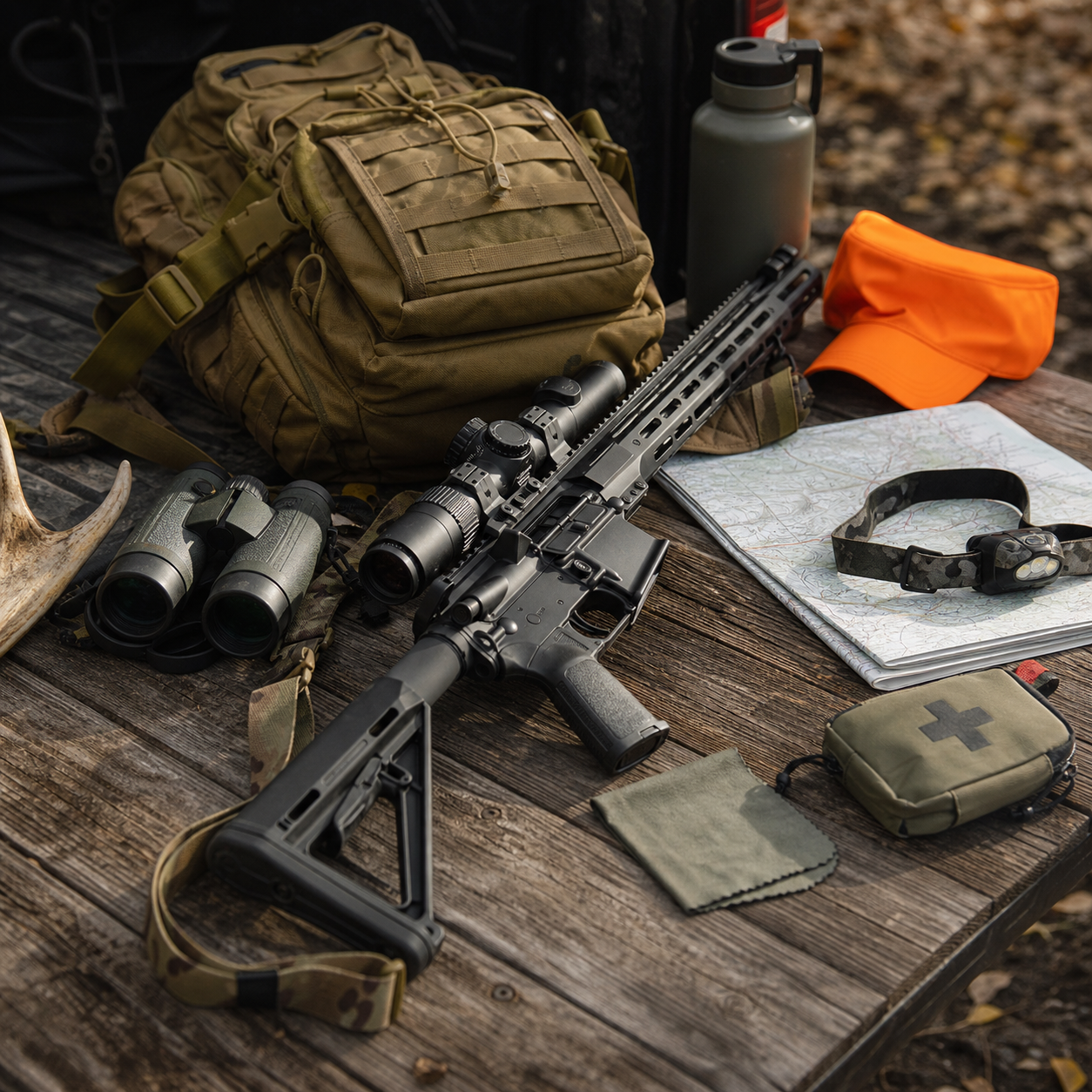
A sling is one of the most useful pieces of hunting equipment, yet it is often treated as an afterthought. In the field, a good sling helps you carry your rifle safely and comfortably while keeping your hands available for climbing, navigating terrain, carrying gear, or using binoculars.
Look for a sling that:
-
Attaches securely to your rifle
-
Adjusts easily while wearing hunting clothing
-
Supports the rifle without slipping off your shoulder
-
Does not create excessive noise during movement
-
Allows you to carry the rifle in a safe, controlled orientation
Spend time practicing with the sling before the season. Learn how the rifle feels while walking, sitting, moving through brush, and transitioning to a supported shooting position. Make sure it does not interfere with your jacket, pack straps, safety harness, or other essential equipment.
Your rifle should always be handled with safe muzzle awareness and a clear understanding of where the muzzle is pointed. A sling makes carrying easier, but it does not replace safe firearm handling.
4. Confirm Your Ammunition Plan
Ammunition selection deserves thoughtful preparation. Hunters should use ammunition that is lawful for their location and appropriate for the game they are pursuing. State regulations can vary by season, zone, species, and method of hunting, so review the current rules before heading out.
Your ammunition checklist should include:
-
Confirming your chosen cartridge is legal for the intended hunt
-
Selecting quality hunting ammunition appropriate for the game
-
Zeroing with the same ammunition you will carry in the field
-
Bringing enough ammunition for the hunt without overpacking
-
Keeping ammunition dry, clean, and protected
-
Inspecting cartridges for visible damage before use
Avoid mixing different loads in the same hunt unless you have confirmed their point of impact and understand the difference. Consistency matters. The ammunition used to zero the rifle should be the ammunition you trust in the field.
Just as important, hunters should understand their own realistic limitations. Practice at responsible distances, use stable shooting positions whenever possible, and only take a shot when the target is positively identified, the background is safe, and the shot can be made ethically.
5. Pack the Field Essentials
The hunt often depends on the equipment that supports the rifle, not just the rifle itself. A well-packed day bag can keep you comfortable, prepared, and focused when weather or conditions change.
Use this field-essentials checklist:
-
Valid hunting license, required tags, and photo identification
-
Current state hunting regulations, saved offline or carried in print
-
Phone, backup power bank, and emergency contacts
-
Map, GPS device, or offline navigation app
-
Headlamp with fresh batteries
-
Weather-appropriate clothing and rain protection
-
Water and calorie-dense food
-
First-aid kit
-
Field-dressing tools, gloves, and game bags where appropriate
-
Blaze orange or other legally required visibility clothing
-
Binoculars
-
Wind indicator, if useful for your hunting style
-
Basic rifle cleaning supplies and a cloth for optics
-
Small trash bag to pack out waste
Check weather forecasts, but prepare for conditions to change. Cold, rain, wind, and low light can turn a simple hunt into a demanding one quickly. Carry what you need to remain safe and comfortable, but do not overload yourself with gear you have not practiced using.
6. Make Safety and Ethics Part of the Checklist
The most important item on every hunting checklist is judgment. Safe, ethical hunting protects you, your hunting partners, other people outdoors, wildlife, and the future of the sport.
Before every hunt, commit to these standards:
-
Treat every firearm as if it is loaded.
-
Keep the muzzle pointed in a safe direction.
-
Keep your finger off the trigger until you are ready to fire.
-
Be certain of your target, what is beyond it, and what is around it.
-
Follow all landowner rules and state regulations.
-
Respect property boundaries and public-land requirements.
-
Take only ethical shots within your abilities.
-
Recover game responsibly and make every reasonable effort to avoid waste.
Preparation gives hunters confidence, but it should also create humility. Conditions change. A responsible hunter knows when to wait, when to pass on a shot, and when to call the day early.
A hunt-ready setup is built through preparation, not luck. Inspect your rifle, confirm your optic, practice with your sling, verify your ammunition, and pack the essential gear before the season begins.
The goal is simple: arrive prepared, hunt safely, make ethical decisions, and enjoy the time outdoors. When every part of your setup has been tested and organized, you can focus less on equipment problems and more on the hunt itself.
Get your hunting setup ready before opening day. Explore ACME Rifles and ACME Machine rifle, optic, mount, and accessory options through an authorized dealer, then spend time at the range confirming your setup safely and responsibly.